A Five-Day Eco-Adventure Throughout Florida’s Paradise Coast

For eco-conscious travelers who want to experience Florida’s Paradise Coast beyond beautiful beaches and resorts, there is so much to see and do. From boardwalks to swamp walks, paddling to birding, our wild areas offer a vast array of adventures that you can experience on your own or with the help of knowledgeable guides.
Here is a five-day sample itinerary:
Accommodations
Before we begin, you’ll need a place to stay. Florida’s Paradise Coast is renowned for its luxury resorts along the Naples waterfront and on the Marco Island beaches, as well as charming boutique hotels in downtown Naples. Any of them are conveniently situated for an eco-visit that will take you all around the Paradise Coast.
Day 1 — Arrival and Settle In
Given that your check-in is likely in the mid-afternoon, go ahead and enjoy the accommodations at your hotel. Who knows — you might even have time for a massage or spa visit to help get your mind and body prepared.
One thing you can count on here is sunsets. And a great way to experience one is to take a sunset cruise offered by several operators. On many evenings, the sky is painted with intense colors as the sun gradually descends on the Gulf horizon. Even after the sun disappears, the colors remain, shifting hues.
Sunset tours range from a dinner cruise aboard the 105-foot Naples Princess to private trips on smaller charter boats.
Day 2 — On the Water
Let the serious eco-adventures begin! Fishing is big on the Paradise Coast. Anglers have a choice of several charters, with captains who know where to find snook, redfish, mangrove snapper, spotted seatrout and other species common in our near-shore waters. Captains will know which fish are in season, but you can also opt for catch-and-release.
Paddleboarding and kayaking offer more closeup on-the-water experiences. You can expect to spot dolphins, sea turtles, alligators, rays and more in the water beneath you – and countless birds in the mangroves and trees around you. Many local rental agencies will deliver a craft to a location of your choosing, and there are many launch points throughout the Paradise Coast.
One can’t-miss option is to go on a guided kayak tour led by an expert who can take you to some gorgeous spots while teaching you about our remarkable eco-systems. Here are a few popular kayaking destinations:
- Ten Thousands Islands, a vast network of mangrove islands and islets just off the coast. You’ll paddle your way through the mangroves, onto oyster bars, shallow bays and other scenic spots.
- Rookery Bay, 110,000 acres of pristine mangrove forest and protected waters. Rookery Bay consists largely of estuaries, where rivers and streams meet the sea for unique habitats, and a diverse array of wildlife thrives.
- Paradise Coast Blueway, a network of paddling routes that encompasses 73 miles and twists through an array of ecosystems: mangroves, cypress forest, tropical woodlands, barrier islands and remote beaches. A Blueway paddle offers flexibility — you can take short trips close to civilization or plan an all-day exploration traversing untamed areas.
These are just a few of the ways to immerse yourself in paddling on Florida’s Paradise Coast — but, again, using a guide will likely yield the most satisfying experiences.
For your on-the-water day, make sure to bring plenty of drinking water, snacks, sunscreen and dry bags for cell phones and valuables. It’s best to wear a lightweight long-sleeve shirt and a wide-brimmed hat. It’s obviously preferable to paddle with a partner, but if you head out on your own, tell someone where you’re headed and be sure to bring a GPS/mapping app.
After a day on the water, enjoy a delicious dinner and a comfortable bed. You’ll have earned them.
Day 3 — Big Cypress National Preserve
Ready to get wild?
Encompassing 729,000 acres, Big Cypress, part of the greater Everglades, makes up a substantial portion of the Paradise Coast’s inland area. And it’s only a 45-minute drive from downtown Naples and Marco Island. This exotic wilderness features five distinct ecosystems.
To make the most of a day trip, here are a few popular areas that will introduce you to the park and also take you deeper into it. Big Cypress allows hiking, cycling, paddling and other activities.
- We recommend stopping at the Nathaniel P. Reed Visitor Center, located just inside the park on Tamiami Trail, the main artery through Big Cypress. Gather valuable information (starting with a 22-minute introductory video) and ask a park ranger questions.
- To get the lay of the land, take a cruise in your vehicle, making sure to turn south on 24-mile Loop Road, where surfaces get more rugged and the surroundings get wilder, then rejoin Tamiami Trail. You can stop anywhere along the roughly 65-mile circuit.
- For paddlers, the Turner River trail runs eight to 10 miles, depending where you launch. You’ll get a wonderful sense of the preserve’s many ecosystems, including the famous “sea of grass.” Plan about five hours or more for this trip.
- For something more leisurely, stop at Kirby Storter Roadside Park and stroll the one-mile boardwalk that takes you through sawgrass prairie, cypress swamp, and ends at an overlook of a gator hole. This is one of the easy trails in the park. There are myriad other trails — including longer ones that take you way into the wild.
- Big Cypress offers free ranger-led programs from November through April. By all means, take advantage of these terrific outings.
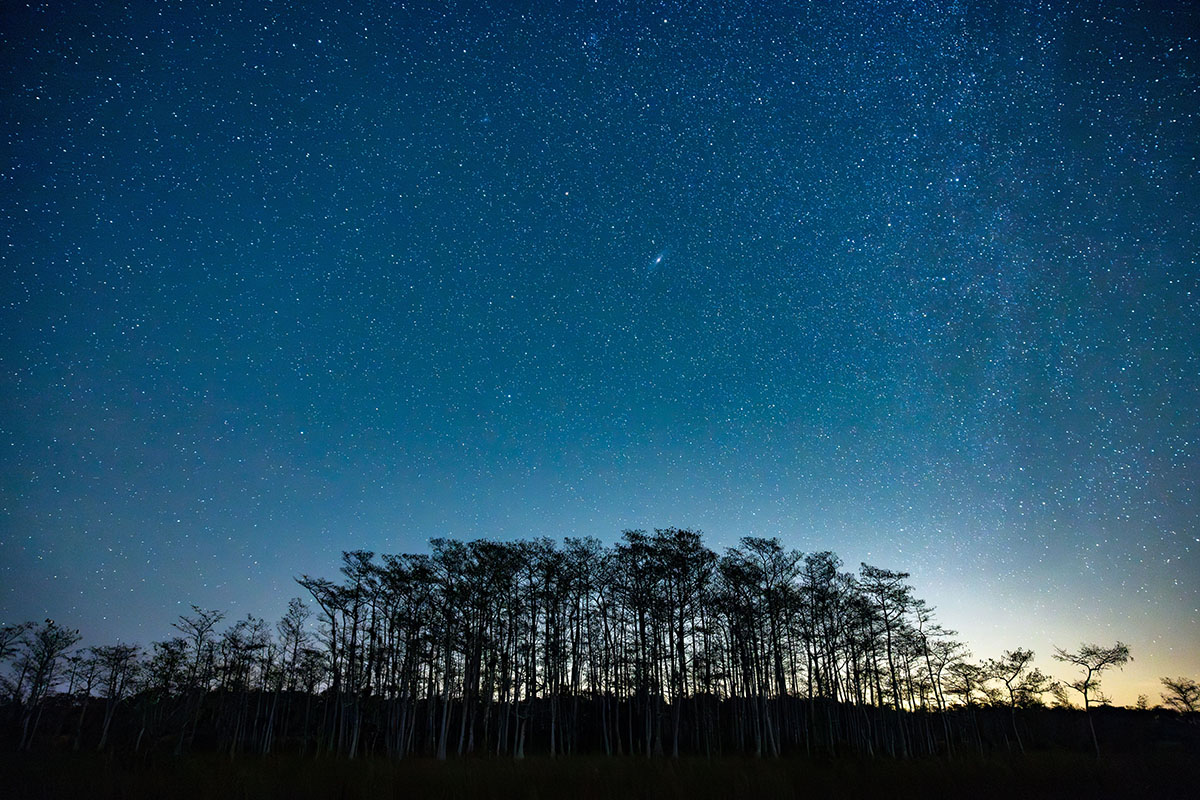
- If you choose to stay into the evening, you’ll be treated to a sunset from a different vantage point than the beach. And then the stars come out. Big Cypress, free of light pollution, is designated as an International Dark Sky Park. Here’s an overview of dark sky exploration in the preserve, as well as some of the prime stargazing spots. Depending on the time of year, you may want to bring along a light jacket. A reclining beach chair will make your stargazing more comfortable.
- To mix a bit of culture in with your eco-touring, stop by the Clyde Butcher Gallery, which showcases the renowned wildlife photographer’s large-scale works. The gallery also offers guided swamp walks just behind the building. You’ll slowly wade through clear waters (not muck) — from ankle to thigh deep — that cover prairie and cypress stand. Wear long pants and a pair of shoes you don’t mind getting wet.
Day 4 — Audubon’s Corkscrew Swamp Sanctuary (and then some)
Birders from all over come to Audubon’s Corkscrew Swamp Sanctuary — a 13,000-acre preserve located 30 miles northeast of downtown Naples — to spot and photograph a dazzling array of our feathered friends. The list of species is immense, but here are just a few: wood stork, anhinga, several types of egrets and herons, osprey, barred owl, and bald eagle.
Corkscrew has another important distinction: Its 740 acres of old-growth bad cypress trees represents the largest remaining stand in North America. They grow as high as 130 feet, with trunk circumferences that can exceed 25 feet.
The preserve’s main attraction is a 2.25-mile elevated boardwalk, which takes you through pine flatwoods, wet prairie, marsh, old-growth cypress forest and cypress dome. While the rest of the park is pretty much off limits, people — especially birders — routinely spend blissful hours soaking in the sights and the ambience. Corkscrew also offers guided experiences, including boardwalk tours, early birding tours, nightwalks and a Beginner Swamp Walk. The preserve charges an admission fee, and guided programs cost extra.
If you come to Corkscrew from June to October, you’ll have a chance to see the famous Super Ghost Orchid, widely considered the largest ghost orchid ever discovered.
After soaking in the preserve’s magic, feel free to head back to your hotel, where you can lounge by the pool, walk on the beach and, of course, take in another sunset. There’s no point in depriving yourself of the Paradise Coast’s many creature comforts.
Day 5 — Departure
You’ve seen and done a lot during your eco-visit, so maybe kick back and relax on your last day. If, however, you want to squeeze in one more novel experience, take a small ferry boat to Keewaydin Island, which can only be accessed by watercraft. The narrow, eight-mile strip of pristine white sand, one of the last undeveloped barrier islands on Florida’s west coast, is known as a sheller’s paradise. You’ll hardly find a better beach excursion.
Have a safe trip home. You’ll return with plenty of photos and videos to make your friends and neighbors jealous — and inspire your next eco-journey to Florida’s Paradise Coast.