A Three-Day Eco-Adventure in Big Cypress National Preserve
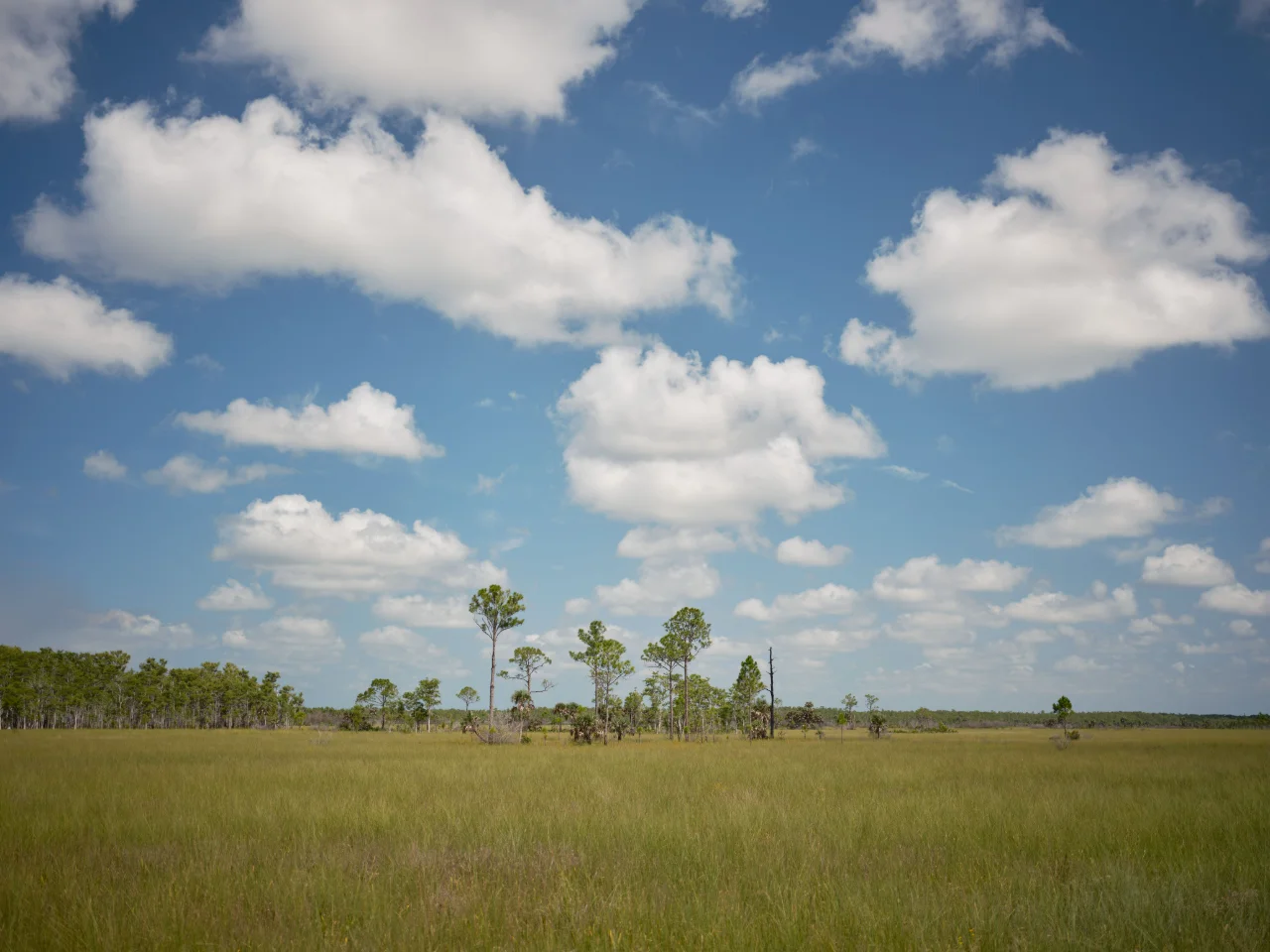
It’s all but impossible to fully experience the entirety of Big Cypress National Preserve. After all, its sprawling 729,000-acres, part of the greater Everglades, covers most of the eastern (inland) portion of Florida’s Paradise Coast. The park includes five distinct ecosystems, and is populated by thousands of plant and animal species. It’s a wild wonderland of exhilarating beauty.
Although you can never see it all, a three-day Big Cypress excursion will provide everything you’re looking for in an eco-adventure like this: scenic vistas, quiet surroundings, birdwatching, animal and plant sightings, and of course, exercise.
Here is a sample itinerary:
Before we begin, you’ll need a place to stay. There are three main lodging options. First, make daily trips from a resort in Naples or Marco Island, most of which are less than an hour’s drive from Big Cypress. The polar opposite is camping. Big Cypress includes a few campgrounds that accommodate RVs, although without hookups. There are also several primitive tent campgrounds that can only be reached on foot.
To maximize your visit while maintaining creature comforts, you might consider staying in Everglades City, a quaint fishing village of roughly 400 full-time residents. There you can choose between small hotels — Ivey House, Everglades City Motel, the historic Rod & Gun Club — and the somewhat more upscale River Wilderness Waterfront Cabins. These places won’t pamper you like the Paradise Coast’s world-class resorts, of course, but you’ll have a comfortable bed and air conditioning.
Everglades City also has a handful of restaurants, most of them seafood-centric (with local delicacy gator bites on the menu). You can also stock up on supplies at Right Choice Supermarket, a neighborhood grocery.
Day 1 — Getting the Lay of the Land
To get oriented and make the best of your visit to Big Cypress, stop at Nathaniel P. Reed Visitor Center, which is located on U.S. 41 (aka Tamiami Trail) just a few miles into the preserve. The facility is about a 45-minute drive from downtown Naples and the resorts on Marco Island.
The center provides visitor information, has exhibits (including a 25-minute introductory film) and — probably best of all — a short boardwalk and a few easy trails, so you can take a stroll and view wildlife right away. You’ll see plenty of birds and perhaps some alligators. Oftentimes, park rangers are on hand to answer questions.
The park also has another facility, Oasis Visitor Center, with similar offerings, 19 miles east of the Reed Visitor Center.
Continue your orientation with a scenic drive through Big Cypress. As you cruise along the Tamiami Trail, you’ll see many of the park’s myriad ecosystems, including wet prairies, sawgrass marsh and cypress stands. Don’t blink or you’ll miss the Ochopee Post Office, at 61.3 square feet, the smallest operating post office in the U.S.
About 15 miles from the visitors center, turn South at Loop Road, where the road becomes narrower and the surface more rugged. Loop Road runs 24 miles and reconnects with Tamiami Trail at the entrance of Everglades National Park. By all means, feel free to make stops along the way. An ideal place is 10 miles in at Pace’s Dike Trail, which runs in a straight line southward. The trail is flat and easy, and you’ll get deeper into the park and closer to the wildlife.
The round trip from the visitor center and back is about 65 miles. Depending on how many stops you make, plan on the scenic drive taking two to three hours.
Nightfall is magic in Big Cypress. You’re likely to see a breathtaking sunset. When it gets fully dark, you’ll want to spend some time stargazing. Thanks to its location far from the lights of nearby civilization, the park is designated as an International Dark Sky Park, and the skies are alive with countless stars. From December through March, the National Park Service offers free ranger-led astronomy programs — usually held near the Reed Visitor Center. Of course, you can certainly behold the star-painted skies on your own. Just choose a spot away from light, and bring along a reclining beach chair. You may end up staying a while.
Day 2 — A Big Day in Big Cypress
Kayaking, bicycling and fishing are among the many popular eco-pursuits in Big Cypress, but for purposes of this itinerary, we’ll focus on hiking.
Big Cypress’s is webbed with trails, all of them unpaved, and all of them great for viewing the endless wildlife wonders that make the park so special. During the dry season (November through April), which is regarded as the best time to visit, the paths are mostly dry. In the wet season, flooding from rainfall causes large sections of trails to have water as high as knee-deep.
Most of the trails are flat. Presuming they’re dry during your visit, their difficulty comes down to how far you want to go. And in Big Cypress, you can go very, very far — or not far at all. The good news is that many of the most popular trails intersect with Tamiami Trail.
Here are some options:
- The Deep Lake Trail’s roughly one-mile route runs through diverse habitats, including tranquil Deep Lake, one of five natural sinkhole lakes in South Florida. This trail is considered a terrific way to experience Big Cypress without undertaking an expedition.
- The southernmost leg of the Florida National Scenic Trail zig-zags north-south for 30 miles through Big Cypress, and crosses Tamiami Trail, making for easy access. You can venture as far as you want, but be careful. You may be transfixed by your surroundings, so make sure and keep track of your progress — because, remember, you’ve got to turn around and hike back.
Whether you’re going for a quick hike or something longer, it’s always best to consult a trail map and make a plan. Even better, get advice from a ranger at the visitor center.
For a post-hike adventure, there’s nothing quite like an airboat tour. Several companies offer these thrill rides. The small vessels — propelled by a giant fan with a pilot in the back — are quick and remarkably agile. You zip around mangrove islets and by prairies. The captain slows down in places, explains habitats, and will make sure you get to see a gator or two at close range. (Safely, of course.)
Day 3 — One More Adventure Before You Depart
Of course, all of the above experiences are available to you on departure day, but here’s one more suggestion:
Renowned wildlife photographer Clyde Butcher has a gallery 20 miles east of the Reed Visitor Center, where he exhibits his striking and extremely large back-and-white photos, most of them of Big Cypress. But this is not your everyday art gallery. It offers guided swamp walks behind the building, where a knowledgeable guide will lead you through various habitats. For more than an hour, you slowly wade through wet prairie and cypress strand. You won’t be walking through a bog, but rather clear, cool water that ranges from ankle to waist deep. Wear long pants and bring a pair of shoes you don’t mind getting soaked.
So there you have it. A three-day eco-adventure on the Paradise Coast that’s sure to send you home with some unforgettable stories – and pictures. After all, how much can you talk about your time spent poolside at a resort?